
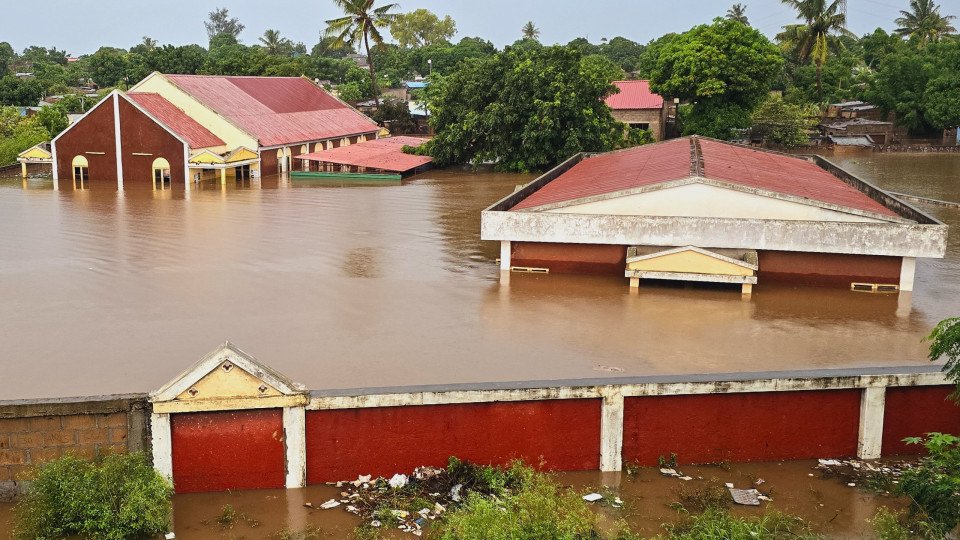

According to the budget execution document from January to March, these phenomena, especially intense rains and strong winds, “caused the death of 62 people, mainly due to the collapse of walls and drowning”.
“152 injuries were recorded and a total of 181,708 people were affected, corresponding to 37,279 families”, the document states.
The Government’s survey indicates that 4,203 houses were also affected, of which 921 were completely destroyed, 556 classrooms, affecting 102,001 students, 137 health units, 21 churches and 147 power poles.
These “extreme events” also affected the road sector over a length of around 728 kilometers, including the destruction of nine bridges, five jetties and 40 aqueducts, among others, while in the agriculture sector 118,268 hectares of various crops were affected, of which 56,240 hectares “were lost”, while in the fishing sector 451 artisanal fishing vessels were affected.
Mozambique is considered one of the countries most severely affected by climate change in the world, cyclically facing floods and tropical cyclones during the rainy season, which runs between October and April.
The 2018/2019 rainy season was one of the most severe in memory in Mozambique: 714 people died, including 648 victims of cyclones Idai and Kenneth, two of the biggest ever to hit the country.
In the first quarter of last year, intense rains and the passage of Cyclone Freddy caused 306 deaths, affected more than 1.3 million people in the country, destroyed 236 thousand homes and 3,200 classrooms, according to official Government data.
At the end of last September, the President of Mozambique, Filipe Nyusi, called for the population and entities to prepare for the predictable effects of the ‘El Niño’ phenomenon in the country in the following months, with forecasts of above-normal rainfall and outbreaks of drought .




Leave a Reply