
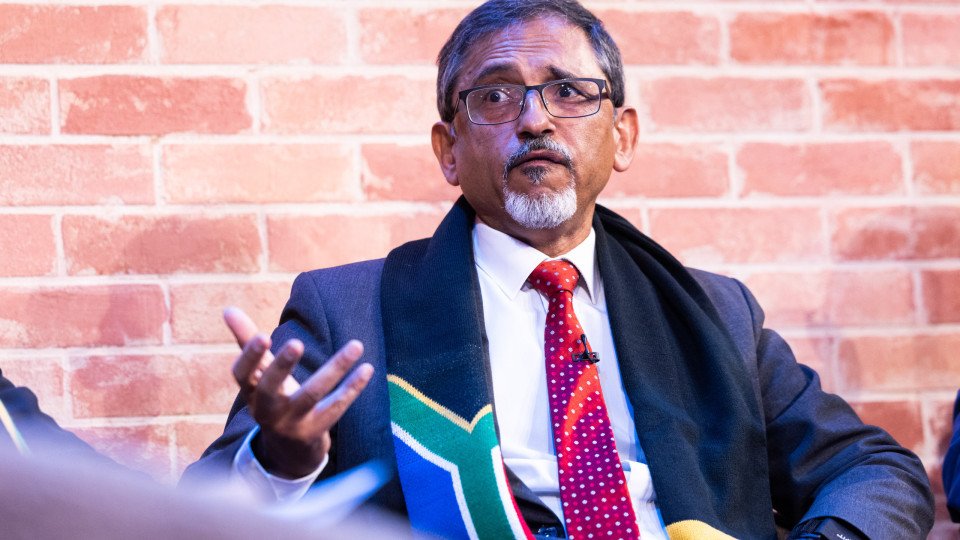

“Since the beginning of 2020 and the third quarter of last year, the economy has been disrupted by two global crises and four local crises that have manifested themselves successively,” said Minister Ebrahim Patel, during the presentation of a report by the Department of Industrial Policy and Strategy, referring to a figure that could reach 42 billion euros.
According to the Bloomberg financial news agency, the shocks listed were the Covid-19 pandemic, the July 2021 demonstrations – the largest since apartheid – the war in Ukraine, heavy flooding in 2022, successive electricity blackouts and logistical constraints.
The shocks, he said, came when the economy was still recovering from an era of endemic corruption, known as ‘state capture’, during Jacob Zuma’s tenure, which implicated large public companies such as Eskom Holdings or Transnet.
These crises delayed and then changed the focus of industrial policy, according to the report, which points out that without these crises and assuming that the economy maintained the average of the decade before the pandemic, GDP would be 3 to 5% higher than it is today.
South Africa’s economy, the largest in southern Africa, the region where Angola and Mozambique are located, has seen average annual growth of 0.5% since 2020, the first year of the covid-19 pandemic.



Leave a Reply