
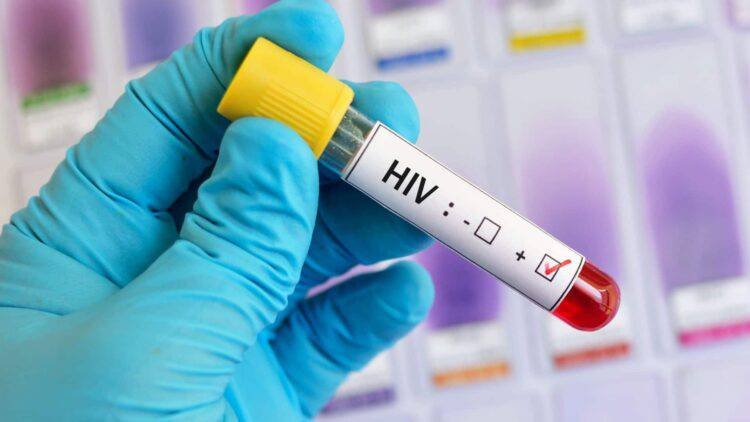

A new study presents promising results for an effective vaccine against the HIV virus. The results of these still preliminary studies were published in the journals Science, Science Translational Medicine and Science Immunology, and all four works describe new steps in a sequential vaccination strategy to obtain an effective candidate against the HIV-AIDS virus, reported this Thursday the Efe agency.
The experiments were carried out on rhesus monkeys and rats (mice), and one of the proposals is in phase 1 of clinical trials.
The authors include scientists from the American Scripps Research Institute, the University of Louisville and the University of California, San Diego.
The HIV epidemic has entered its fifth decade and the scientific community has devoted time and resources to developing vaccine candidates against the virus.
However, health authorities still lack an effective, approved vaccine that induces broadly neutralizing antibodies capable of neutralizing the most common circulating HIV strains, the group stressed in a summary in the journal Science.
One solution is a process called germline selection, in which researchers use a series of immune system-directed proteins (immunogens) to guide and ‘prime’ young B cells as they mature in places called germinal centers.
The goal is to induce cells to produce broadly neutralizing antibodies against HIV. José Alcamí, director of the AIDS Immunopathology Unit at the Carlos III Health Institute, highlighted that the objective of any preventive vaccine is to induce the production of neutralizing antibodies by the immune system and normally the antigen used must include or be formed by the envelope or proteins of surface of the virus.
It is these proteins that interact with the cell’s entry receptors, meaning that their blockage by antibodies neutralizes the virus infection, explained the Science Media Center Spain (SMC), a scientific resources platform.
The difficulty in obtaining a vaccine is due to the structure of the HIV envelope, which makes it very inaccessible to the action of neutralizing antibodies, explained the virologist, who is not involved in the studies.
Given the difficulty of generating neutralizing antibodies against HIV, the authors of these new works guide the immune system to generate a specific type of neutralizing antibodies with different immunogens.
First simpler (so that they can be better recognized) and then more complicated and closer to the original HIV envelope protein, explained Julià Blanco, head of the Virology and Cellular Immunology group at the IrsiCaixa AIDS Research Institute.
The HIV envelope protein has different regions that are recognized by neutralizing antibodies. For a specific region (the CD4 binding site), this strategy had already been used and even reached studies in humans.
Now a second region appears (the base of the V3 loop) that can also be used in a similar way.
“If the two strategies are combined, a greater quantity and diversity of these neutralizing antibodies could be generated (which would make a potential vaccine more effective)”, highlighted Blanco, who is not involved in the studies.
Sequential vaccination can be an excellent strategy, but it can require an excessive number of immunogens, which would make it difficult to convert it into a product that reaches the population most in need. “There is a lot of work ahead,” summarized SMC.




Leave a Reply