
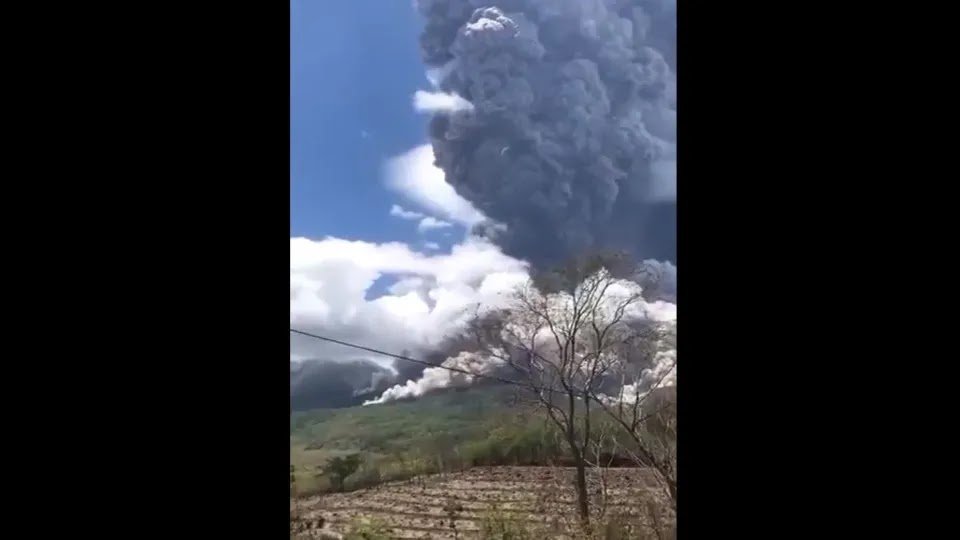

The Lewotobi Laki-Laki volcano, in eastern Indonesia, erupted again this Thursday, after killing at least nine people and injuring 64 on Tuesday.
So far, there are no reports of deaths associated with this new eruption, which the Associated Press reported was even larger than the one that occurred earlier in the week.
The 1,584-meter-high volcano, located on the remote island of Flores, released columns of ash 11 times, with the last and largest column reaching eight thousand meters high, according to the director of the Center for Volcanology and Geological Disaster Mitigation , Hadi Wijaya.
The first eruption affected more than 10,000 people in 10 villages, with around 4,400 residents taking refuge in makeshift emergency shelters following the environmental disaster, which destroyed seven schools, nearly two dozen homes and a convent on the mostly Catholic island.
Authorities raised the state of alert in the area to level 4, the highest, established an exclusion radius of around seven kilometers around the volcano and warned of the risk of flooding in the area due to precipitation.
Eight locations, with a total population estimated at 16 thousand inhabitants, are within the exclusion zone, according to official data.
Indonesia has more than 400 volcanoes, of which at least 129 are still active and 65 are classified as dangerous.
In December 2023, the eruption of the Merapi volcano on the island of Sumatra killed 23 people.
In May, also in the vicinity of Merapi, at least 60 people died after heavy rains washed volcanic material into residential areas.
Indonesia is located in the so-called Pacific “ring of fire”, an area of great seismic and volcanic activity that records around seven thousand earthquakes per year, most of them of low magnitude.


Leave a Reply