

“At the General Affairs Council meeting, I did not receive meaningful answers to my questions about the European Commission’s intention to withdraw its reasoned opinion under the Article 7 process. This is the second electoral gift from the European Commission to the new Polish Government , to the great glory of the rule of law”, criticizes the Hungarian Minister for European Affairs, János Bóka, in a post on the social network X (formerly Twitter).
The ruler of the nationalist-conservative Fidesz executive calls for “a serious debate on the credibility of the article 7 procedure and the blatant double standards”, in a letter addressed to the vice-president of the European Commission responsible for Values and Transparency, Vera Jourova.
The criticism comes on the day that the EU Council decided to adopt the European Commission’s proposal to end the procedure opened since 2017 against Poland for disrespecting EU values, including the rule of law, recognizing the country’s efforts.
In a statement in Brussels, the Belgian Minister for Foreign Affairs, Hadja Lahbib, announced on behalf of the rotating presidency of the EU Council (now held by Belgium) that the institution that brings together member states “has registered the Commission’s intention to withdraw its proposal and bring the procedure to an end”.
In particular, “the Council today welcomed the step taken by Poland to address the issues raised in the recent proposal and affirmed the importance of greater monitoring of reforms and the implementation of its action plan”, said the head of Belgian diplomacy, speaking at the “very strong support” from EU member states.
“We are very pleased to welcome Poland back to the group. I think it is a great day for more than 37 million Polish citizens, a great day for the EU and a great day for democracy”, said Hadja Lahbib.
The endorsement comes after, at the beginning of May, the European Commission proposed, after six years, the closure of the procedure opened against Poland for disrespecting the rule of law, recognizing Warsaw’s “hard work and efforts”.
In a statement, Brussels said that, after completing its analysis, it wanted to close the case on the rule of law in Poland in the context of the procedure set out in Article 7(1) of the EU Treaty, arguing that it no longer there is a clear risk of serious breach.
The institution pointed out that “Poland launched a series of legislative and non-legislative measures to address concerns regarding the independence of the judicial system”, having also joined the European Public Prosecutor’s Office in February 2024.
Prime Minister Donald Tusk has been in office since December 2023 and succeeded more than eight years of ultra-conservative power.
In the EU, the rule of law is governed by the principles of legality, legal certainty, respect for fundamental rights, separation of powers and equality.
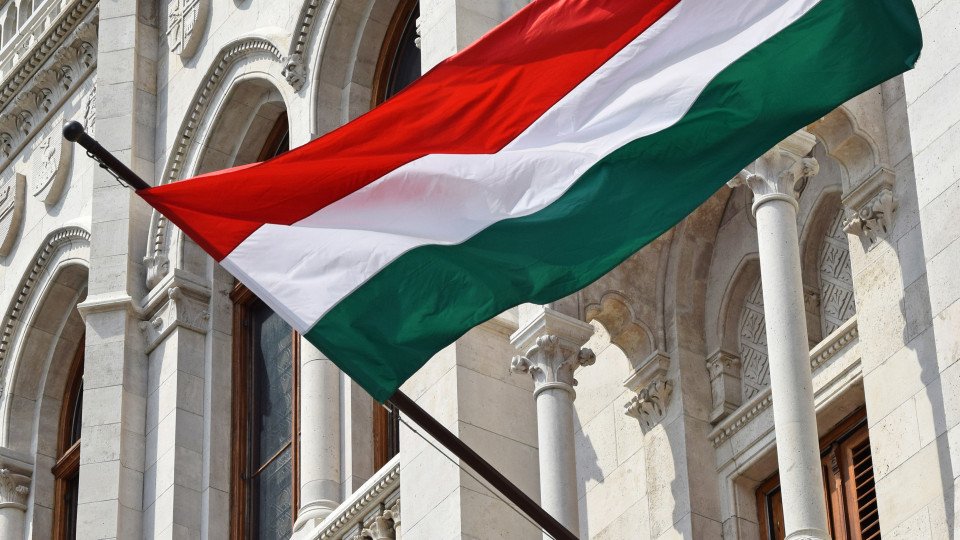
A similar procedure remains, however, open against Hungary, as in September 2018, the European Parliament triggered article 7 against Budapest due to the deliberate attacks on democratic institutions and human rights by the nationalist-conservative Fidesz Government, the political strength of Prime Minister Viktor Orbán.
Hearings on the case of Hungary, the country that will assume the rotating presidency of the Council of the EU in the second half of 2024, continue.
Article 7 of the EU Treaty allows for the possibility of suspending Member States’ rights (such as the right to vote in the Council) in the event of a serious and persistent violation of Community standards.



Leave a Reply