
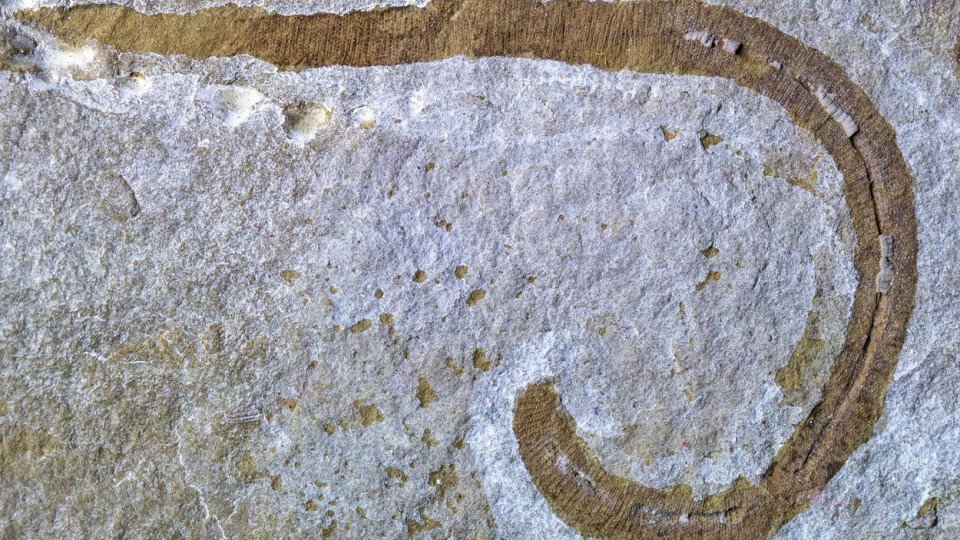

Remains of a prehistoric worm have been discovered in Herefordshire, UK. The carnivorous predator, which was found in an abandoned Victorian quarry in the village of Leintwardine, near the border with Wales, stuck its throat out to capture and consume its prey, having characteristics similar to the worms depicted in the film ‘Dune’.
Scientists believe that the creature, called Radnorscolex latus, lived at the bottom of the ocean around 425 million years ago, when that region was submerged, reported the PA agency.
Investigations by scholars at the Natural History Museum in London, which were published in the journal ‘Papers in Palaeontology’ suggested that the animal had a retractable throat that could extend to the sea floor to capture prey hidden in the sediments. It is thus reminiscent of the giant worms from the film ‘Dune’, according to researcher Richie Howard.
“We think they weren’t very picky when it came to eating and probably just stuck their throats in the mud and grabbed whatever they could find. They make us think of the worms from ‘Dune’ in that aspect,” he said.
Even though the animal’s fossils were discovered a century ago, technology was not advanced enough to allow paleontologists to examine them in detail.
Now, researchers at London’s Natural History Museum have discovered that the worm had rows of sharp teeth and hooks on its head, which it would use to anchor itself to the ground and drag its body to move. However, it would only be about eight centimeters long.
Radnorscolex belongs to a group of extinct worm-like animals known as Paleocolecids, which became completely extinct about 400 million years ago due to rapid climate and sea level changes.




Leave a Reply