
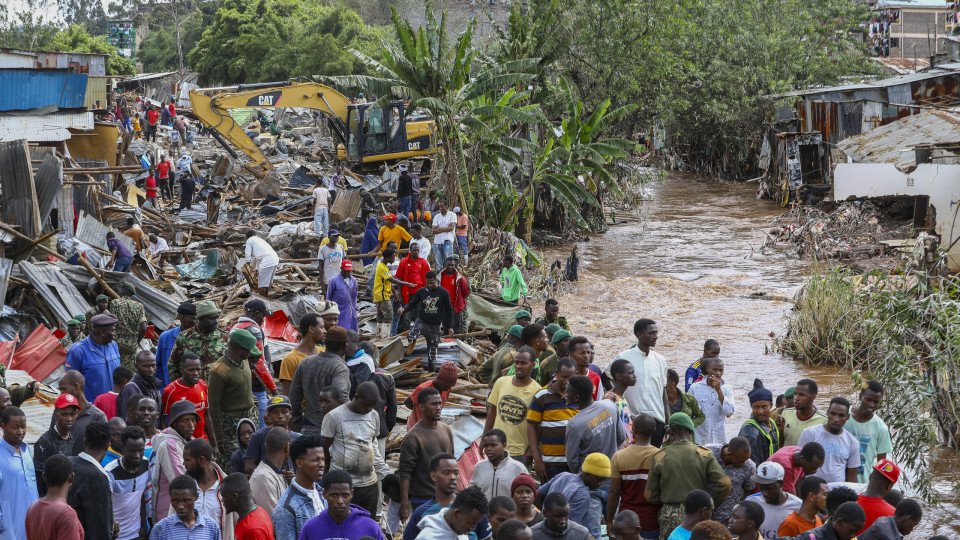

Torrential rains, waves of more than two meters and violent winds, with gusts of more than 75 kilometers per hour, have begun to hit the region, a situation that the Kenya Meteorological Department expects to worsen.
Around 400 people have died in East Africa since March and tens of thousands have been displaced by torrential rains that have caused floods and landslides, swept away houses and destroyed roads and bridges.
“Current observations suggest that tropical cyclone Hidaya has reached the coast of Tanzania. But there is another low pressure system developing behind it,” says the Kenyan department.
In today’s bulletin, the Tanzania Meteorological Authority reported strong winds and heavy rainfall along the coast during the night, urging residents living in risk areas and those working by the sea to take “maximum precautions”.
The cyclone is expected to reach gusts of 165 km/h when it reaches land, the regional climate center said.
The cyclone season in the southwest Indian Ocean normally runs from November to April, with around a dozen storms a year.
On Friday, Kenya’s President William Ruto called the weather forecasts for the country, which is about to face the first cyclone in its history, “terrible” and postponed indefinitely the reopening of schools scheduled for Monday.
In Kenya, since March, at least 210 people have died and around 100 others are missing, while 165,000 people have been displaced, according to government figures.
“No corner of our country has been spared this devastation,” summed up the President.
On Thursday, the Interior Ministry ordered all people living near large rivers or “dams or reservoirs full or almost full of water” to leave these areas within 24 hours.
To the south, at least 155 people have died in Tanzania in floods and landslides.
East Africa is highly vulnerable to climate change, and rainfall in the region this year has been amplified by El Niño, a natural climatic phenomenon usually associated with global warming, which causes droughts in some parts of the world and heavy rains in others.
In Burundi, at least 29 people have died and 175 have been injured since the start of the rainy season in September, according to the United Nations Office for Humanitarian Affairs (OCHA).
OCHA estimates that the torrential rains in East Africa have affected more than 637,000 people, 234,000 of whom have been forced to flee their homes.
The United Nations High Commissioner for Refugees (UNHCR) said it was “particularly concerned” about the fate of thousands of displaced refugees in Burundi, Kenya, Somalia and Tanzania.
By country, OCHA reports around 195,000 displaced people in Kenya as of Friday, according to the country’s National Disaster Operations Center. Burundi counts 31,200 displaced people and warns that more than 20,000 farming families have lost their crops, almost 40,000 hectares, or 10% of agricultural land.
“They are being forced to flee once again to save their lives after their homes were swept away,” said UNHCR spokeswoman Olga Sarrado Mur.
In April 2024, the UNHCR launched its first Climate Resilience Fund to reinforce the need to help refugees, displaced communities and their hosts in the face of an increase in extreme weather events.




Leave a Reply