
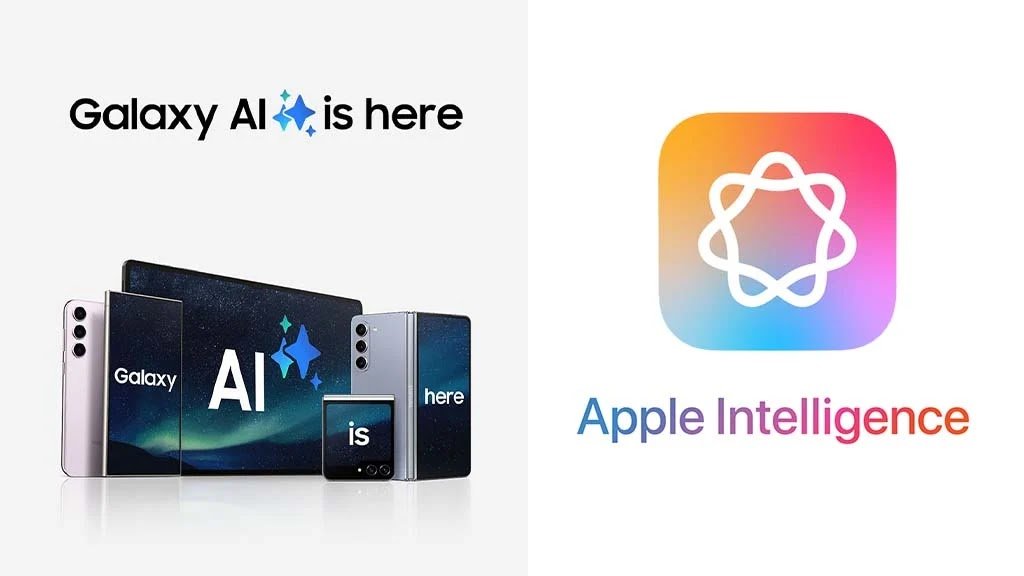

When comparing Apple’s AI (Artificial Intelligence) and Samsung’s AI, there are distinct approaches and ecosystems that each company has developed, with unique strengths and uses. Both companies are integrating AI into their products, but their strategies differ based on their core businesses, product lines, and philosophies.
1. Apple AI (Apple’s Core Focus: Ecosystem & Privacy)
Apple focuses on integrating AI and machine learning into their ecosystem, with a strong emphasis on privacy and seamless integration across devices.
-
AI in Devices:
Apple uses its own Neural Engine in the A-series chips (e.g., in the iPhone and iPad) for on-device processing of AI tasks. The Neural Engine is designed to handle machine learning tasks quickly and efficiently. -
Siri (Virtual Assistant):
Apple’s Siri is their primary AI-based virtual assistant, though it is often considered less advanced than competitors like Google Assistant in terms of capabilities and natural language processing. However, Apple focuses on user privacy with Siri, ensuring that voice data is processed locally and not shared with cloud services unless explicitly allowed. -
AI for Photography:
Apple’s AI-driven photography features, such as Smart HDR, Deep Fusion, and Night Mode, enhance the quality of photos by using machine learning to adjust lighting, details, and color. These features work mostly on-device, preserving user privacy. -
Health & Fitness AI:
Apple integrates AI into health apps (like the Apple Watch) to monitor user activity, detect irregular heart rhythms, and even alert users to potential health issues using machine learning models. -
Focus on Privacy:
A big selling point of Apple’s AI is its focus on privacy. AI tasks, especially in Siri and other services, are often designed to work without needing to send user data to the cloud unless absolutely necessary.
2. Samsung AI (Samsung’s Core Focus: Innovation & Versatility)
Samsung integrates AI in a variety of ways, especially in its hardware and devices. Their approach spans both consumer devices and home appliances, making them versatile in terms of AI applications.
-
Bixby (Virtual Assistant):
Samsung’s AI assistant, Bixby, is meant to control Samsung devices across its ecosystem, including smartphones, TVs, appliances, and even smartwatches. While Bixby isn’t as well-known or widely adopted as Siri or Google Assistant, Samsung continues to develop it for deeper integration with their products. -
AI for Display Technology:
Samsung uses AI in its display technology (e.g., QLED and Neo QLED TVs). For example, their AI upscaling feature can improve lower-resolution content into higher quality by using machine learning to enhance details and clarity. -
AI in Photography:
Similar to Apple, Samsung employs AI in its camera systems, with features like Scene Optimizer and Single Take Mode. AI enhances photo quality by detecting scenes and adjusting settings accordingly. Samsung is also a leader in using AI for 8K video recording and smart camera enhancements. -
AI in Smart Appliances:
Samsung’s AI is widely used in smart home devices like refrigerators, washing machines, and air conditioners. For instance, Samsung’s SmartThings ecosystem uses AI to enable devices to communicate with each other, automating home management tasks. -
Exynos Chips and AI:
Samsung’s Exynos processors, like the Exynos 2200, feature advanced AI and machine learning capabilities. This allows for AI-enhanced functions like real-time object detection and facial recognition, which are integrated into smartphones like the Galaxy S series. -
AI for 5G & Connectivity:
Samsung is also a key player in 5G technology, and AI is used to optimize the performance and reliability of 5G networks, improving things like signal processing, speed, and efficiency.
Key Differences:
-
Privacy & Ecosystem Focus:
- Apple is highly focused on privacy and ensuring that much of its AI processing happens on the device. The tight integration of AI within the iOS ecosystem gives users a more unified experience across Apple’s devices.
- Samsung, in comparison, is more versatile and focuses on creating AI-powered solutions across a wide range of products, from smartphones to home appliances. Their emphasis is on offering a connected experience across different device categories.
-
Virtual Assistants:
- Apple’s Siri is known for its privacy-conscious design but has lagged behind Google Assistant in terms of functionality and AI depth.
- Samsung’s Bixby is more focused on controlling a wider range of Samsung devices, though it is often seen as less refined compared to Apple’s Siri and Google Assistant.
-
Hardware Integration:
- Apple has a more integrated hardware-software approach, using its own chips (A-series, Neural Engine) for AI processing, which is key to its AI’s smooth operation.
- Samsung often uses AI features in its Exynos chips but tends to focus more on incorporating AI into a wider variety of devices, including televisions, home appliances, and mobile phones.
-
AI in Display & Home Appliances:
- Samsung is more aggressive in using AI to enhance its display and home appliance technology. For instance, AI in Samsung TVs can automatically adjust settings for the best picture, while its smart appliances are often built with AI-driven optimization.
- Apple, while focused on simplicity and integration, doesn’t use AI in these areas as much, although it does have smart home capabilities through its HomeKit.




Leave a Reply