
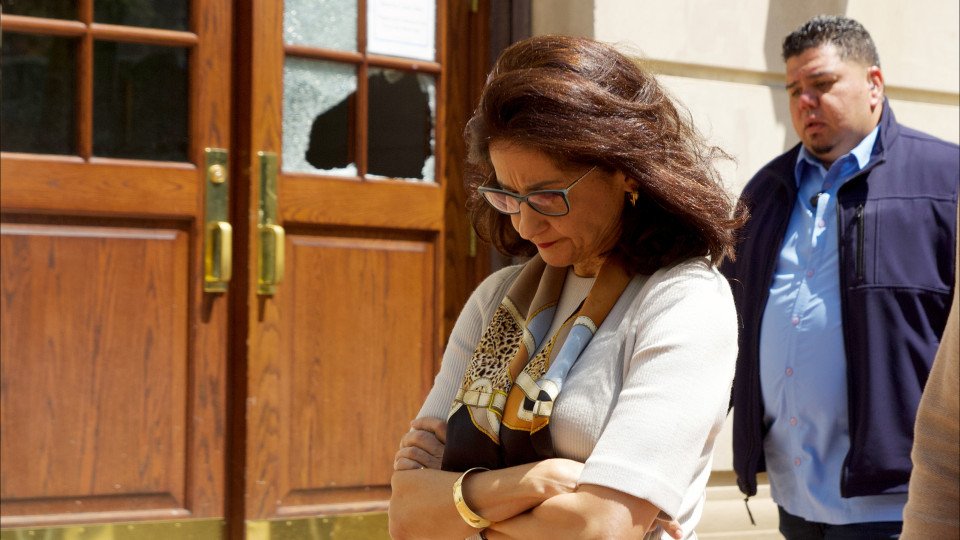

The president of Columbia University in New York has resigned after a term marked by protests against the war between Israel and Hamas and criticism of her handling of the conflict’s divisions.
The university has been the scene of student protests this year, culminating in police officers armed with riot shields storming a building occupied by pro-Palestinian demonstrators. Similar protests have taken place at universities across the country.
Minouche Shafik’s resignation came a few days after the university confirmed the dismissal of three deans who, according to the authorities, had exchanged derogatory text messages during a discussion on campus about Jewish life and antisemitism.
Shafik said in a letter to the school community dated 8 July that the messages were unprofessional and ‘disturbingly touched on old antisemitic stereotypes’.
The president was on the list of university leaders called before Congress earlier this year, and was strongly criticized by Republicans who accused her of not doing enough to combat concerns about antisemitism at Columbia.
The dean announced her resignation in a letter emailed to the university community a few weeks before the start of classes on 3 September.
In the letter, Shafik announced ‘progress in a number of important areas’, but regretted that the term had also been a ‘period of turbulence in which it was difficult to overcome divergent points of view’.
In the statement, he recognized that the protests at the institution had contributed to the decision to resign.
‘This period had a considerable impact on my family as well as others in the community,’ Shafik wrote.
‘Over the summer, I had the opportunity to reflect and decided that moving on at this time would be the best way to enable Columbia to meet the challenges ahead,’ he continued.
The board of trustees announced that Katrina Armstrong, executive director of Columbia University’s Irving Medical Centre, has agreed to be interim president.
‘She is the right leader for this moment,’ said the board.
Armstrong, for her part, said she was ‘deeply honoured’ to lead the university at a ‘crucial moment’.


Leave a Reply