
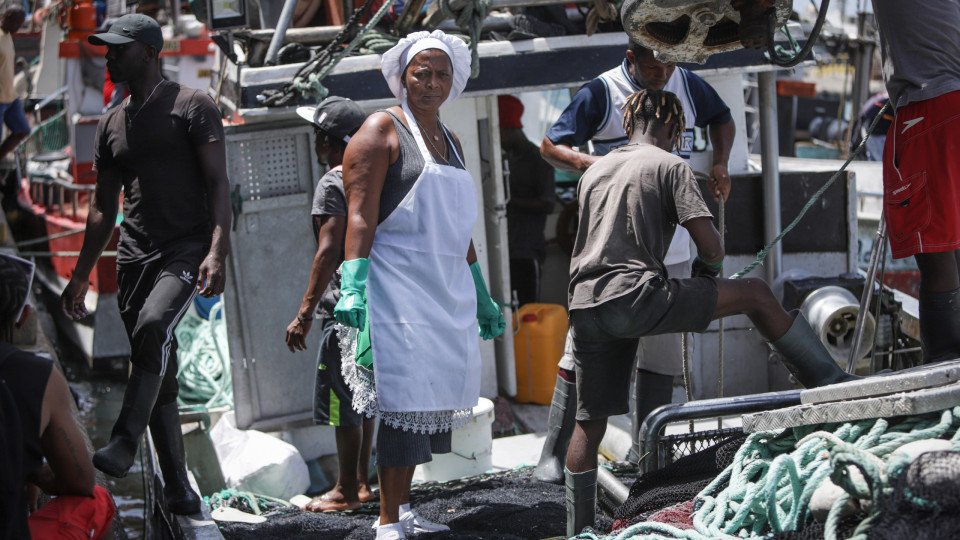

Maria Semedo, 54 years old, and two other sisters, finished 4th grade at the same time, but the parents were only able to continue paying for the youngest’s studies.
A context of vulnerability in which sacrifices are born: Maria had to start selling fish alongside her mother, from head to toe, in Ribeira Grande de Santiago, a routine that symbolizes selflessness for families and for an economic activity that the Government wanted to pay homage to This year, establish Fish Day.
Maria Semedo’s secret was to always save 100 escudos every time she could.
She earned so much until she got married, built a house and moved to the capital, Praia.
With the mortgage on the house, the family bought their first boat, in a business that grew until they had four boats that make Tufuca one of the main shipowners in the country, providing employment to almost 90 people and, in the meantime, helping two of their three children to finish higher education, breaking the sphere of vulnerability that, as a young woman, had enveloped her.
“I am confident that, with this work, I can achieve all the dreams I asked God for,” she told Lusa.
One of them is to create a fish processing company, but for now, it is asking for more support for fishing owners, space for storing fish, more ice and a market just for selling fish, separate from the unloading activity.
Tufuca is one of hundreds of fishmongers – women dominate the activity – who frequent the fishing pier at the port of Praia every day, under concession since 2019 to the company Cabo Verde Ocean.
Next door, Ingina Moniz Correia, 65 years old, started selling fish at the age of 18.
It is one of the oldest in the space and the best prepared to summarize what is currently happening in the sector: fish is more expensive and quantities are decreasing in the seas of Cape Verde.
In other words, the profession requires you to do math every day, but Ingina says that she will be a fishmonger “until she dies”, regretting another sacrifice, that of never registering for social security to benefit from support when “the body can’t handle it” .
The lack of social support is one of the portraits of the informality that prevails in this activity.
Around half of the employed population in Cape Verde works informally and the profession of fishmonger is one in which this modality predominates.
Among so many women is Paulo da Veiga, 47 years old, with a stall for over 20 years, where he sells “big fish”, such as tuna, serra or esmoregal.
Sacrifices? Yes, there is, he says, without hiding the discomfort of those who wake up every day at 5:00 am, but aware that this earns them precious income.
The Government of Cape Verde established May 17th as National Fish Day, in recognition of the promotion of “the country’s fishing value chain and food security”.
At the same time, it honors “all the sacrifice” that is required of them, as they are, in many cases, “heads of single-parent families, responsible for raising and educating their children”.
The date follows the example of what already happens “with the national fisherman, which is celebrated on its own day”, on February 5th.
According to the Fisheries Census, in 2021, the archipelago has around 1,881 fish sellers.



Leave a Reply