
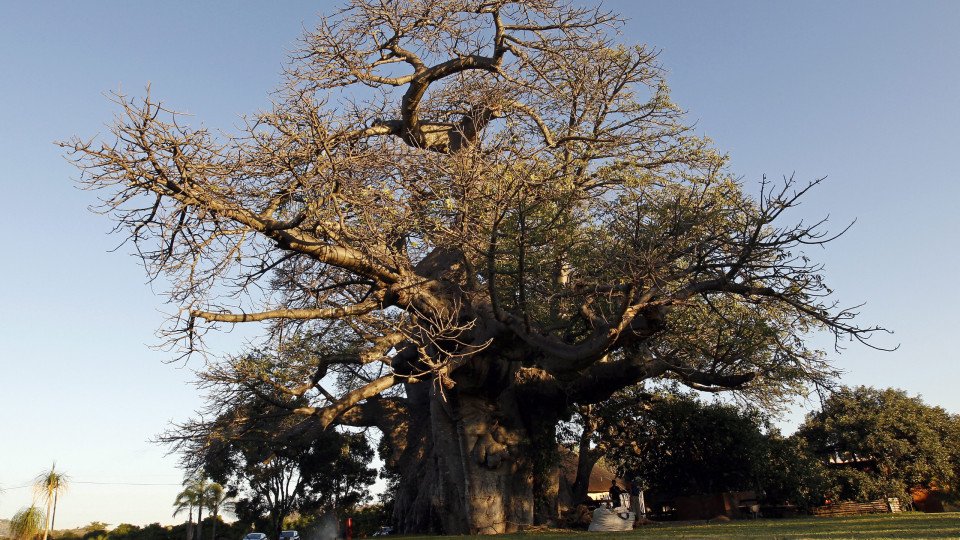

The baobab, known as the ‘tree of life’, originated in Madagascar, from where it divided into other species, some of which reached continental Africa and Australia, according to a study published this Wednesday in the journal Nature.
From a single species native to that country, the eight currently known species were generated, according to the report carried out by the botanical gardens of Wuhan, in China, and Kew, in the United Kingdom, together with the University of Antananarivo, in Madagascar, and Queen Mary University, London.
Researchers from these centers concluded that, from an initial species, located in Madagascar, the process of speciation began, in which variations of the baobab were generated that later spread to other African countries and Australia.
These have developed different floral structures to attract different animals — from sphinx moths to bats and lemurs, which help pollinate the tree.
Other factors, such as climate and changes in sea level in their habitats, also influenced their evolutionary process.
In this regard, the scientists highlighted that the tree tends to disperse more when the sea level is lower, so a rise in sea level in a context of global warming could have an impact on the existing baobab population.
According to Ilia Leitch, a researcher at Kew Botanical Gardens, this study made it possible to find new information about the speciation patterns of baobabs, as well as showing how they were influenced by climate change.
According to the authors of the investigation, the discovery could offer keys to reducing the impact of global warming on species and, in this way, help to conserve the different species of the tree.
In this context, the researchers proposed that some of the baobab species, whose population has declined by at least 90%, be considered critically endangered by the International Union for Conservation of Nature (IUCN) Red List of Threatened Species.




Leave a Reply