
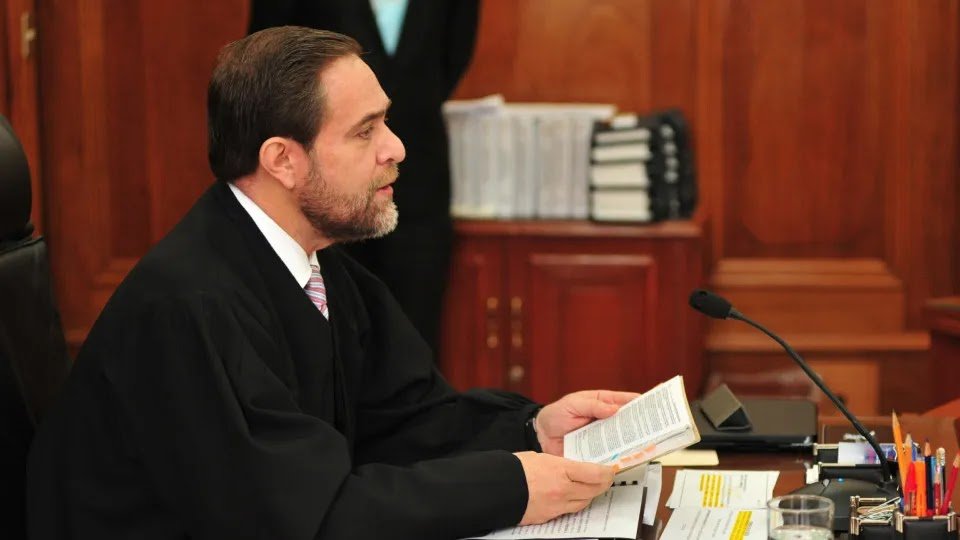

Jorge Mario Pardo Rebolledo presented his resignation today, in a letter sent to the upper house of the Mexican parliament, joining Alfredo Gutiérrez Ortiz Mena, who resigned this Tuesday.
Five other judges are expected to follow this path, including the president of the Supreme Court, Norma Piña. The only judges who have expressed interest in going to the elections are Lenia Batres, Yazmín Esquivel and Loreta Ortiz, aligned with the current Government.
Pardo Rebolledo highlighted that his resignation comes in light of the judicial reform that forces judges to resign if they do not want to participate in the electoral process in June 2025.
The judge said he was convinced that he had carried out his work with independence, objectivity and excellence and denied that his dismissal implied acceptance of judicial reform.
Furthermore, Pardo Rebolledo energetically rejected what he described as “swearing and lying” to which he was subjected as a member of the Supreme Court.
The judicial reform was approved by the former head of state, Andrés Manuel López Obrador, weeks before leaving power, on October 1st.
During his term, Obrador accused the Mexican judicial system of being corrupt and serving only the economic interests of the elite, while more than 90% of crimes go unpunished in Mexico, according to non-governmental organizations.
The judicial reform establishes that judges who do not run for office or are not elected will lose their right to retirement, unless they resign before the end of the competition.
Mexico’s new president, Claudia Sheinbaum, said Tuesday that the judges’ dismissal was due to a desire to preserve “a lot of money” from their pensions.
The president of the Senate, the upper house of parliament, Gerardo Fernández Noroña, also suggested that judges are refusing to participate in the elections “to leave with bags full”.
Opponents believe that judicial reform will put the independence of judges at risk and make them vulnerable to pressure from organized crime.
The United States, Mexico’s main trading partner, considered the reform “a risk” to Mexican democracy and “a threat” to bilateral trade relations, at a time when Mexico has overtaken China as its neighbor’s largest trading partner. north.
Multilateral organizations such as the United Nations and the Inter-American Court of Human Rights, business organizations such as the International Chamber of Commerce and financial rating agencies such as Fitch and Moody’s have also warned of negative repercussions for Mexico due to this reform.




Leave a Reply