
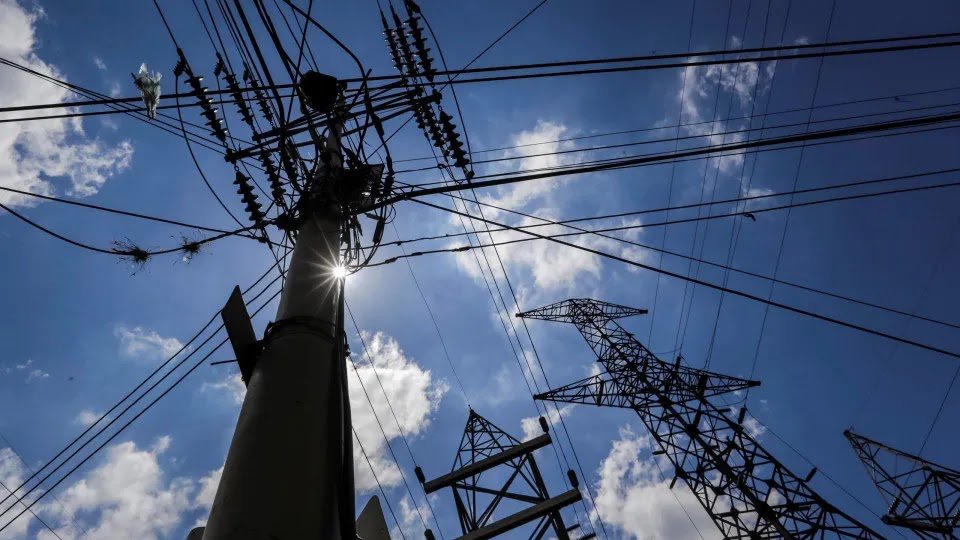

More than 200,000 customers are without electricity in two Mozambican provinces affected by tropical cyclone Jude, the Mozambican Electricity Company (EDM) announced today in a statement.
The 206,600 customers without power are from seven regions in the central province of Zambézia and another 12 areas in the province of Nampula, in northern Mozambique, EDM indicates in the document.
“At this time, access roads to these locations are interrupted, hindering the restoration of the electricity supply to affected customers,” the statement reads.
According to the Mozambican electricity company, at least 74 kilometres of medium and low voltage power lines are damaged in the provinces of Zambézia and Nampula, in addition to six transformer stations and two high voltage towers also affected by the storm, on the line between Namialo and Monapo, in Nampula.
At least nine people died, 20 were injured and another 19,961 were affected by Cyclone Jude in the central provinces of Tete and Manica, as well as Zambézia, Nampula, Niassa and Cabo Delgado, the last three in northern Mozambique, according to the latest update made today by the National Institute for Disaster Risk Management and Reduction (INGD).
According to the data, collected up to Wednesday, Jude had also affected 17,401 students, 264 teachers, 59 schools and 181 classrooms, all data corresponding to the provinces of Nampula and Niassa, in northern Mozambique, and Zambézia, in the centre of the country.
The tropical cyclone entered Mozambique in the early hours of Monday, with winds of 140 kilometres per hour and gusts of up to 195 kilometres per hour, Manuel Francisco, a meteorologist at the National Institute of Meteorology (Inam) in Mozambique, told Lusa.
Shortly after entering the country, the cyclone “returned to the stage of a severe tropical storm and in the next two days [Tuesday and Wednesday] it could vary between moderate and severe storms”, said the meteorologist.
Mozambique is in the middle of the rainy season, which runs from October to April, a period in which cyclones Chido and Dikeledi were already recorded, which also affected the north of the country.
The cyclones hit Mozambique between December last year and January, with the greatest impact in the provinces of Cabo Delgado and Nampula, affecting around 736,000 people and causing the destruction of public and private infrastructure.
Extreme events, such as cyclones and storms, caused at least 1,016 deaths in Mozambique between 2019 and 2023, affecting around 4.9 million people, according to data from the National Institute of Statistics (INE).
The African country is considered one of the most severely affected by global climate change, cyclically facing floods and tropical cyclones during the rainy season, but also prolonged periods of severe drought.




Leave a Reply