
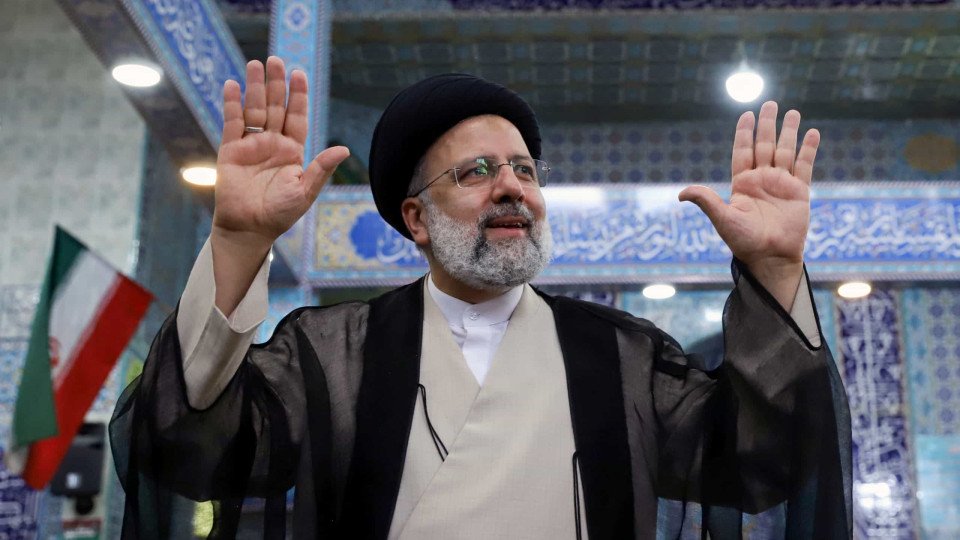

The analyst, author of several books on Iranian history and visiting fellow at the Center for the Middle East at the London School of Economics, also noted how the late President had “unshakable loyalty to the Supreme Leader”, Ayatollah Ali Khamenei.
Given his characteristics as a “diligent and direct statesman” and “diplomatic and cautious nature”, Raisi was “reliable to the regime, to the point of being considered a potential candidate for the position of Supreme Leader in a post-Khamenei era”. “That’s why his loss is important,” he stressed to Lusa.
Former Director of Research at the Ravand Institute for Economic and International Studies, the first independent Iranian think tank, Ghoncheh Tazmini currently lives between Portugal, Canada and the United Kingdom and has triple nationality: Iranian, Portuguese and Canadian.
Born in Tehran, Tazmini moved with her family to London three years before the Iranian revolution (1979) that replaced the pro-Western autocratic monarchy led by Shah Mohammad Reza Pahlevi, with a theocratic Islamic republic under the command of Ayatollah Ruhollah Khomeini.
The author highlighted to Lusa that the Iranian Constitution provides for presidential elections within 50 days, with first vice-president Mohammad Mokhber temporarily assuming the functions of the president.
Ghoncheh Tazmini also characterized mobilizing voters in a short time as “a challenge”, especially in a “regime that faces a historically low voter participation rate”.
This period could serve to “promote a more inclusive political process”, namely through the presentation of a moderate presidential candidate, “potentially increasing voter participation”, she said.
“However, regional tensions may require a more conservative leader, which will lead to intensified competition among hardliners,” she said.
On Monday, Iranian rescue teams recovered the remains of Raisi and eight other passengers who were on the helicopter that crashed the previous day in northwestern Iran, the Red Crescent humanitarian organization announced.
The helicopter that was also carrying the Minister of Foreign Affairs, Hossein Amir-Abdollahian, crashed in the area of Kalibar and Warzghan, in the province of East Azerbaijan, in the northwest of the country.
The Iranian government confirmed Raisi’s death, adding that the disaster will not cause “any disturbance in the administration” of the country.
Speaking to Agência Lusa, Ghoncheh Tazmini estimated “unprecedented crowds” at Raisi’s funeral ceremonies, which began today, “reflecting her popularity among various segments of the population”.
“This outpouring of emotions occurs despite claims about his lack of charisma and supposed unpopularity,” added the author, indicating that at a regional level, Raisi should be mourned as a “supporter and protector of resistance movements, especially among the oppressed and the disadvantaged.”
As for national security, the Guardian Council may impose “stricter control of candidates” to ensure that the new head of state safeguards the country during “regional disturbances”.
Regarding foreign policy, Tazmini noted how the late President reduced the country’s isolation and that it should now maintain the same trajectory, with a “continuous emphasis on the East and participation in non-Western political and economic groupings.”
In the region, Iran should continue to support “local non-state partners, agents and militias”. “This strategy, which Iran views as a form of deterrence based on its perception of a volatile security environment, will continue to be the cornerstone of its military model,” he said.



Leave a Reply