
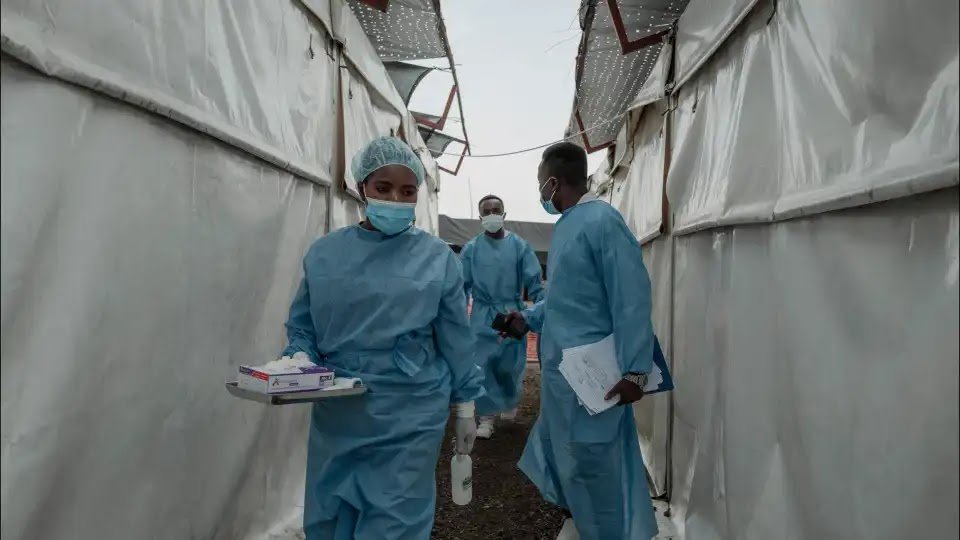

The World Health Organization (WHO) has given the green light to the first in vitro diagnosis of monkeypox (mpox), which could help combat the current epidemic, according to a statement from the organization released today.
“Early diagnosis of mpox allows for rapid treatment and care, as well as control of the virus,” stresses the WHO, although the disease has already caused almost 900 deaths in Africa since the beginning of the year.
The test approved by the WHO – the Alinity mMPXV manufactured by Abbott Molecular Laboratories – is a real-time PCR test that can detect the DNA of the virus, both clade (variant) 1 and clade 2, from swabs of human skin lesions.
By detecting DNA in samples of pustular or vesicular eruptions, laboratories and health professionals can confirm suspected cases of mpox effectively and efficiently.
“This first mpox diagnostic test listed under the emergency use procedure represents an important step in expanding the availability of tests in affected countries,” said Yukiko Nakatani, WHO Deputy Director-General for Access to Medicines and Health Products.
“Improving access to quality medical products is at the heart of our efforts to help countries contain the spread of the virus and protect their populations, especially in underserved regions,” she added.
By including it on its emergency use list, WHO is enabling other UN agencies to distribute it and assuring health authorities in affected countries of its effectiveness, thereby helping to accelerate its rollout.
“In Africa, testing capacity is limited and delays persist in confirming mpox cases, contributing to the continued spread of the virus,” explains the World Health Organization.
In 2024, more than 30,000 suspected cases were reported in Africa, with the highest numbers in the Democratic Republic of the Congo, Burundi and Nigeria.
In the Democratic Republic of the Congo, only 37% of suspected cases were tested this year.
Mpox, formerly known as monkeypox, is a viral disease that spreads from animals to humans, but is also transmitted between humans, causing fever, muscle pain and skin lesions.
On August 13, the African Union (Africa CDC) declared mpox a “public health emergency of continental security” and, a day later, the WHO declared an international health alert.
The WHO health alert refers to the rapid spread and high mortality in Africa of the new variant (clade 1b), the first case of which was identified outside the continent, in Sweden, in a person who had traveled to the African region where the virus is circulating intensely.
This variant is different from clade 2, which caused a violent outbreak in Africa in 2022, as well as hundreds of cases in Europe, North America and countries in other regions, and led to the declaration of an international health emergency by the WHO between 2022 and 2023.




Leave a Reply