
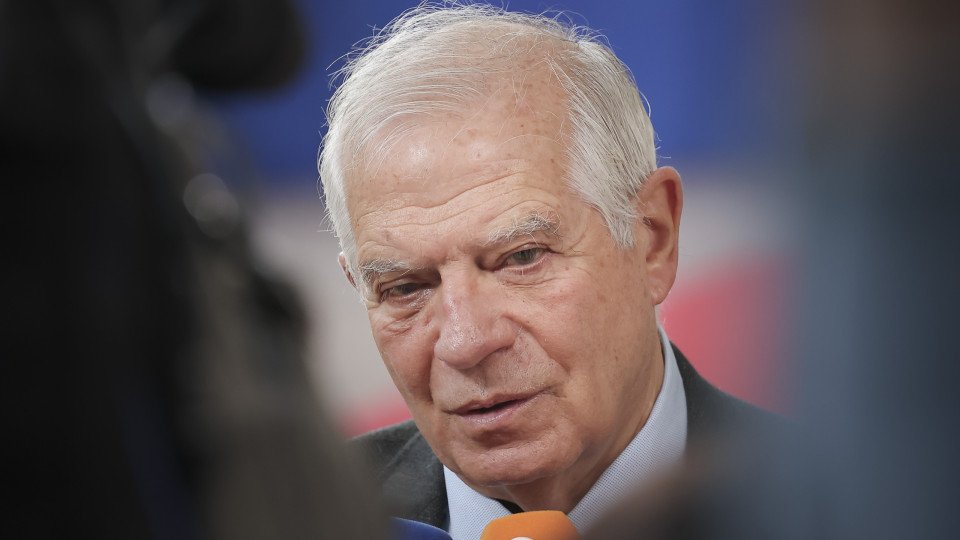

The European Union’s (EU) High Representative for Foreign Affairs and Security Policy, Josep Borell, declared today that the EU will not recognize Nicolás Maduro as President of Venezuela until the electoral records have been verified.
‘Until we see a result that can be verified, we won’t recognize it,’ stressed the head of European diplomacy, after Venezuela’s Supreme Court ratified Maduro as the country’s President on Thursday.
Borrell insisted that ‘everyone should be able to verify the result of an election. However, that hasn’t happened yet [in Venezuela] and we’ve practically given up hope that it will,’ the European diplomat recognized.
The twenty-seven member states, Borrell noted, are ‘at this moment’ trying to establish a position on this issue and, if it is not established now, he said it will be announced at the Foreign Minister’s Council next week.
‘We keep saying that we have to prove this election result and, at the moment, we haven’t seen any proof. No one has seen the electoral minutes, the National Electoral Council should show them to demonstrate what the result is and as long as we don’t see a result that can be verified, we won’t recognize it,’ he stressed.
Borrell made these statements to journalists in Santander, on the occasion of the end of the geopolitics course that, as every summer, he led at the Menéndez Pelayo International University (UIMP), under the title ‘Quo Vadis Europa XII. Europe between wars and elections’.
On Thursday, the Venezuelan Supreme Court ruled that the results of the country’s presidential elections, published by the National Electoral Council (CNE), were valid and that Nicolás Maduro was re-elected, which was rejected by the opposition and part of the international community, who allege fraud.
The Electoral Chamber of the TSJ certified the CNE’s results ‘without objection’ and thus considered Maduro to be the elected President of Venezuela for the 2025-2031 period, despite accusations of fraud made by the opposition, which demanded the release of the minutes.
The decision was made in response to a request from Maduro to review the vote totals, after the opposition published online voting records from 80 per cent of the polling booths, showing that opposition candidate Edmundo González won by a margin of more than 2 to 1.
Venezuela, a country with a large community of Portuguese and Portuguese descendants, held presidential elections on 28 July, after which the National Electoral Council (CNE) awarded victory to Maduro with just over 51% of the vote, while the opposition claims that its candidate, former diplomat Edmundo González Urrutia, won almost 70% of the vote.
The Venezuelan opposition and several countries in the international community have denounced electoral fraud and demanded that the voting records be presented for independent verification, which the CNE says is unfeasible due to a ‘cyber-attack’ it has allegedly been subjected to.
The election results have been contested in the streets, with demonstrations repressed by the security forces, with more than 2,200 arrests, 25 deaths and 192 injured.
The Venezuelan opposition and several countries in the international community have denounced electoral fraud and demanded that the voting records be presented for independent verification, which the CNE says is unfeasible due to a ‘cyber-attack’ it has allegedly been subjected to.
The election results have been contested in the streets, with demonstrations repressed by the security forces, with more than 2,200 arrests, 25 deaths and 192 injured.



Leave a Reply